Showing posts with label cosmetics contemplations. Show all posts

Saturday, 3 August 2013

Cosmetics Contemplations: Decisions, decisions...

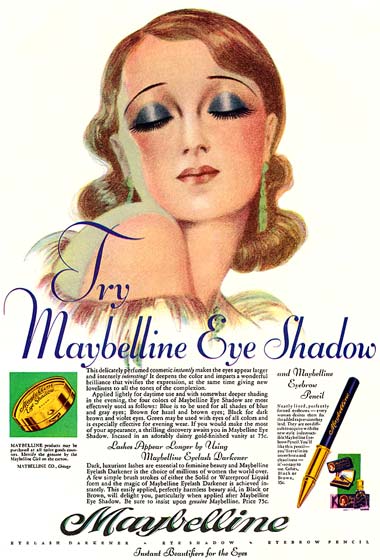
even in the 1920s they were at it
We all make our buying decisions differently - and when it comes to beauty products, the wealth and diversity of recommendations out there can be overwhelming. With so many shiny new product stands, glossy advertisements and lacquered sales assistants out there to 'help' us, how can we decide what products we really need? This is made even more complicated by 'needs' that are created by the brands themselves (do we really 'need' serums, toners, or separate moisturisers for our faces and our necks? I'm not sure that we do), and by the sheer number of different opinions that proliferate. Interested buyers are not only influenced by advertisements, celebrities, in-store displays, and features in newspapers and magazines, but also by friends and family, blogs and vlogs, and product reviews on retail websites. 

But how influential are beauty blogs in particular on people's purchases? Warwick Business School researcher Marianne Johnsen wants to hear from you regarding your views on the trustworthiness of the beauty blogs that you read - and all it takes is your participation in a short survey. How far do you consult beauty blogs before making a purchase? Do you really feel that beauty bloggers are more informed than the average consumer? For how long can beauty bloggers compete against the many other sources of opinion out there? Marianne wants to know. Just a few clicks and you'll be on the way to finding out scientifically how far beauty blogs can be considered trustworthy resources when it comes to making online purchases. Naturally, the results will be shared with you as soon as they are published. 

This is a subject which has hitherto only been studied in Asia - and as they're already ahead of the pack when it comes to BB creams and so forth, it could be a good time to participate in this innovative research by following in their footsteps. If beauty bloggers are really found to be trustworthy and influential, that could affect brands' future tactics in marketing products to the public - which, in turn, affects the products you buy and how you buy them. Decisions indeed!

Sunday, 24 March 2013

Cosmetics Contemplations: Summertime, and the living ain't easy

As the days get lighter and the nights get shorter, we're reminded that summer is almost upon us. Not that you'd know it from the snow/wind/rain/general coldness we've been having, but I know deep down that before I can say "school's out for summer" the IGCSE and IB exams will be underway and I'll be trying to teach and control my sweat patches at the same time, while simultaneously wondering just how to stop my makeup sliding off my face and my students skipping school.

The truth is that I really don't like summer, which is basically like saying you don't like dolphins or Crunchies or teddy bears (thanks, Marian Keyes, for that analogy). I prefer winter fashions and winter food. I don't like being hot, or being woken up by birdsong at 5.00 in the morning when I know my alarm is not due to go off for another hour and a half. And, as mentioned, summer brings its own specific set of beauty bugbears, such as the ongoing attempt to keep excess body hair at bay. 

So since being a hermit for the summer months is not an option, how can we limit feeling and looking like hot sticky messes, knowing that we'll never look like those girls in catalogues who frolic flawlessly on beautiful beaches while sporting the latest fashions? Here's a few of my tips now, so that you can start investing before it gets too hot:

  1. Get yourself a decent deodorant. Mitchum, plus those 48-hour ones, are generally reliable. Hit the pound shops for savings, or wait until other retailers have their own deals on.
  2. Go for sleeveless tops. This will help to keep sweat patches to a minimum. If you must cover up later (to protect you from the sun, or to keep warm in the evening), go for a shawl, or for a shirt made from a sheer fabric so that sweat patches will be less visible or avoided completely.
  3. Go for long-lasting makeup so that you can go all day without touching up, whether you're at a pool party, the beach, or work (ew). Especially recommended are 17 Tattoo Me liquid eyeliner, Benefit's Stay Don't Stray primer, and Clinique's BB cream.
  4. Set with bronzer. Helps with making your makeup last longer, and can be used all over your body to give a sun-kissed glow from day one. I like Agnes B's offerings, but other more experienced bronzer aficionados will undoubtedly be able to offer more suggestions that are more readily available.
  5. Buff your body. Exfoliators will get rid of impurities, such as sweat, that may be sitting on the top layer of the skin just waiting to clog pores. Plus, it creates a smoother base for makeup and body lotions, prevents ingrown hairs, and makes waxing less painful. Those by Purity Organic and Lush are good value.
  6. Moisturise. This not only (like exfoliating) helps to create a smoother surface for makeup to cling to and improves conditions for waxing, but also helps prevent sun damage - especially if you choose a moisturiser containing a sun protection factor. Try products by Neutrogena and Oxy for face, and products by Jergens and Astral for body.
  7. Avoid heat styling. Hairdryers and straighteners are bad enough for your hair as it is, but the sun, sea and chlorine in the summer could make your hair even worse. So lay off the heat styling tools, and either towel dry your hair or leave it to dry naturally after washing. If you really can't resist, make sure you use heat defense sprays to offset some of the damage.
  8. Go to the salon for a wax. While shaving is cheap and painless, and bleach can hide darker hair growth, these methods require repeated use, sometimes daily. Even though waxing means you might have to grit your teeth, it's worth it to know that you'll get through your beach holiday without the fuzz creeping up on you before you've had time to blink.
  9. Get down to the gym, or out to your local park for a run, or to your nearest pool for a swim. There's a chance you'll look better by the summer if you do (at best) - and at worst, you'll feel better and will have used your time productively.
  10. Protect your eyes. Use sunglasses, even if you're just on your way to work. You only get one set of eyes and squinting is never a good look. If you wear glasses regularly anyway, and like me you can't stand contacts, invest in a prescription pair.
  11. Get a pedicure - feet are the hardest body parts to keep looking lovely. They're also better value than a manicure, as we do less with our feet and so the polish tends to stay on the nails longer. Better yet, to save cash, have a friend or family member do yours, and then return the favour!
  12. Use sunscreen - sunburn is not a good look and skin cancer won't be either in years to come. My faves are lotions by Piz Buin and Vichy; shop online for the best deals.

Monday, 14 January 2013

Cosmetics Contemplations: My Bach Flowers Experiment

I'd like to believe that I'm quite open-minded when it comes to alternative remedies. I've taken herbal diet pills, which I felt really helped to keep my hunger pangs down while dieting, and homeopathy has also really helped my father (possibly the most cynical, least happy-clappy guy alive) with his allergies. I can frequently be seen in Holland and Barrett during my visits to the UK, and cure-alls such as arnica and tea tree oil are permanent mainstays in my home. So perhaps it wasn't a great surprise when I said yes to my aunt, who required case studies as part of her training to become an official Bach Flowers practitioner.

You may have heard of Bach Flowers - but beyond Dr Bach's most famous Rescue Remedy, what else do you know about them? 

Dr Bach was an English bacteriologist and homeopath who rose to prominence in the 1930s thanks to his herbal remedies. He believed that plants' healing properties could be harnessed to not only treat physical conditions but also emotional and spiritual problems. The Rescue Remedy itself is famed for its ability to calm people who are struggling to deal with a stressful situation, and it contains a combination of five flowers: impatiens, rock rose, star of Bethlehem, cherry plum, and clematis. However, a patient's individual treatment may contain up to seven flowers, chosen from a list of 38. This is decided by a qualified Bach Flowers practitioner after consultation with the patient. This consultation almost takes the form of a counselling section, whereby the patient tells the practitioner what problems or worries they are currently experiencing, whether these are physical or mental. Patients are normally reassessed after six weeks, with a 1.5-hour consultation session setting you back around £50.

Patients take their seven flowers in the form of a tincture (in which the flowers are diluted with water and brandy), which can be consumed neat or mixed with a drink of their choosing. The Rescue Remedy itself is available as a tincture and as tablets. A Bach Flower cream and lip balm also exist, which are based on the Rescue Remedy, with the addition of crab apple for extra healing, and these can be used all over the body from face to feet.

I'm not going to go into all my worldly woes on here. But suffice it to say that after my free consultation it was recommended that I try a tincture consisting of the following:
  • mimulus (for known fears, including driving - this one I specify as it's relevant later)
  • impatiens (to encourage calm)
  • holly (to act against envy)
  • crab apple (for my acneic skin)
  • white chestnut (for persistent thoughts that prevent sleep)
  • larch (to boost confidence)
  • olive (for feelings of tiredness and exhaustion)
This tincture was given to me for free (but would normally cost about £5; some practitioners include this in the consultation cost, so check before booking). It was, however, also recommended that I use the Bach cream for my face and Rescue Remedy pastilles (again, for the driving issue). The Bach cream was given to me as a gift from my mother, but normally of course I would have to pay for this myself. As for the pastilles, I purchased these myself online (they retail at £5 a tin, but are often on 3-for-2 at Boots).

During the first 24 hours of my using the tincture, I noticed two obvious effects. One: a marked increase in my energy levels. Secondly, the best night's sleep I'd had in months. You could joke and say that this was down to the brandy that is also present in the tincture, but seeing as you take so little (16 drops a day - and bear in mind that the tincture also includes the flowers and water), I doubt that such a small amount of alcohol would make you sleep so well. Both of these aspects have continued to improve even though I now no longer use the tincture. It would be a lie to say that I never get exhausted or never sleep badly anymore, but there has without doubt been an improvement in the two-and-a-half months since my consultation.

I also noticed a reduction in envy while using the tincture, although there has been a small resurgence of this since stopping. I have coped well at work, with and without the tincture, managing my tasks with minimal stress in spite of a significant increase in workload. 

In addition, my skin condition has also improved slightly, although I think that this is thanks more to the cream than to the tincture - to the extent of drawing a couple of compliments. The cream itself is pleasant to use: it smells pleasantly of flowers without being a heavy scent and it also doesn't bog skin down in terms of texture. It's very light, and is slightly watery without being runny, absorbing quickly without greasiness. While not the most luxurious cream I've ever used, you could argue that it has made a small difference. One tube lasts 10-12 weeks and costs about £6.50.

The one area in which I saw no change, however, was my confidence in driving. I have been taking lessons since September and find that I become extremely nervous and panicky during them, even to the point of crying in the car, in spite of previous driving experience. This was not ameliorated by the pastilles or the tincture and so probably amounts to something that needs to be treated by a doctor.

I'm well aware that Bach Flower remedies have not had a very good clinical record, with the word 'placebo' having been thrown around a lot. However, I do think that placebos themselves have their own value, and that if these help someone to the degree that they do not then need to treat their ailments with further medicine or therapy, then they are ultimately positive. I also like the idea that in this way a person is able to self-medicate naturally. Nonetheless, there are clearly some things that people suffer with that cannot be 'cured' through Bach Flower remedies. Practitioners tend to advise that this may be the case and that anyone considering Bach Flower remedies should go through qualified herbalists, taking advice from doctors alongside and/or subsequently. In any case, I would be willing to continue with Bach Flower remedies in some of the forms that they take, as well as recommending this to friends and family, as I have to a degree found it to be effective. Now to send my bottle back for a refill...

Friday, 15 June 2012

Cosmetics Contemplations: Lifestyles of the pale and interesting

...with apologies to Good Charlotte there.

The approach of summer means that many are beginning to consider their pale and pasty pins and whether or not to splash out on a spray tan for the season, as well as all of the other trappings that summer beauty entails: waxing, manicure, pedicure, hair conditioning...

But the truth is that not everybody enjoys this time of the year. Marian Keyes encapsulates the feeling beautifully in her novel A Woman In The Know:

"Summer may be here, but autumn is just around the corner, and for those of us who like to cover up, it can't come soon enough. As the poet so eloquently put it: "Autumn! Season of new boots and jackets!" (At least, how the poet would have so eloquently put it if the poet had been a woman.) I love autumn. It might be because my birthday is in September - poor criticized Virgo! - and I associate it with presents, cake, and lots of attention, but the shameful truth is that I'm not really a summer person. Yes, I know this won't go down well, and that saying you don't like summer is like saying you don't like dolphins or teddy bears or Crunchies. My issue (I'm not sure I like that word) with summer is that everything's too bright, hot, and exposed. My clothes are all wrong, and summer brings me into a head-on collision with my lumpy upper arms. I'm tormented by them. Should I reveal them looking like sausage-skins stuffed with cauliflower florets, and endure the sniggers of others, or keep them under wraps and swelter? If I elect to swelter, I have to deal with skinny smooth-armed types who've never known a day's lumpiness in their lives, goading me: "Why are you wearing your cardie?" "You look so hot!" "Look at her everyone, she's melting!" "Stupid woman." While I'll have to insist, even though my face is the color of a raw steak and sweat is running down my back, that I'm fine, a little chilly even."

Dressing for summer is another difficulty; exposed legs means it's tricky enough to keep up the battle against unwanted hair, let alone also have the maintenance of a fake tan to contend with. For me, fake tan is out for this reason, and sun beds are out on the grounds of health (even stars of TV show The Only Way Is Essex recently boycotted sunbeds in support of Cancer Research's R UV UGLY? campaign). Cost is also a factor in both. A good compromise that I've found so far is the tan accelerator (I reviewed Piz Buin's recently): no more high-maintenance than normal sunscreen, not that much more expensive, and certainly safer than sunbeds, as they often provide sun protection factors too. Self-tanning moisturisers, such as those made by Jergens, Dove or Johnsons, are another excellent alternative.

Beyond that, if I want a tan, I prefer to go the 'natural' route: exposing myself to sun slowly, with plenty of sunscreen and time in the shade, to build up a gradual colour. It's free, it's the way God made it, it contains vitamin D, and can improve skin complaints. But ultimately no tan is 'good' for you and it will age you prematurely - which means it's good that I'm not that bothered about having a tan overall. I have always been pale, and my parents sometimes wonder if it's a self-fulfilling prophecy given that my first name, Bianca, has proved to be ludicrously accurate over the years. It's as if my paleness is now part of who I am - and in the face of Paris' perma-tanned trophy wives and shows like Jersey Shore, it's almost a distinguishing feature too. I doubt I would feel like 'me' with a tan - I've never had any sort of tan in my life beyond the very light sort that fades quickly. So I guess I'll carry on waiting for winter and embracing my paleness - and hoping others don't feel insecure for doing the same thing.

Sunday, 27 November 2011

Cosmetics Contemplations: Christmas Collections 2011

And on that highly alliterative note, let's begin.

 Giorgio Armani's Madre Perla Collection
Aiming to epitomise the glamour of the 1930s, this collection takes the art deco movement as its inspiration, exploiting pure lines, sophisticated colours and luxurious details to their fullest extent. The £95 Madre Perla palette evokes silk lingerie and is set off by lacquer and metal, while the more affordable Eyes To Kill eyeshadows (£24.50 each) come in glistening taupes, golds and silvers. The Gloss d'Armani capitalises on bolder colours - shown above are shades Rouge 404, Pink 507, Plum 603 and Plum 604, which at £21 each, would make a glamorous yet not bank-breaking gift.

Bath and Body Works All I Want Liplicious Collection
Despite being unavailable in the UK (sob), these look just too delicious to not feature here. Bath and Body Works' festive glosses combine holiday flavours with Vitamin E and jojoba oil, and are available in five cheekily-named variants: Gingerbread Giggle, Candied Smile, Peppermint Hug, Snickerdoodle Squeeze, and Cranberry Kiss. At $8 a pop (or $16.50 for the whole set of five), they're the perfect stocking-filler.

Get ready to party with MADARA Skincare
MADARA's Flower Dust Shimmering Body Lotion (£22) promises to turn heads at Christmas parties with its light-reflecting particles, as well as protecting skin from winter cold with its nourishing ingredients (including calendula, camomile, seaweed and rosehip). Its £25 Tinting Fluid uses St John's Wort, cocoa and plantain, among other ingredients, to allegedly help give you a natural dewy complexion while disguising imperfections and fine lines - but with only coming in two shades, I'd say that this tinted moisturiser is a bit of a gamble. The brand's Tinting Lip Glosses, priced at £9.90 each, may be a better bet, combining natural colours with moisturising properties using plant minerals, mica, soy beans, sea buckthorn and more.

Luxurious gifts from Chantecaille
Chantecaille's Swarovski-studded bottles and compacts are sure to glitter under the trees of those willing to cough up. Its Crystal Fragrance (of which there are 5 scents: Pétales, Tiare, Vetyver, Frangipane and Kalimantan), whose bottle was designed by artist Cimon, retails at £500, but even those with more modest budgets can also partake: its South Sea Pearl body highlighter, enclosed in a flow-through brush, costs £46, which while extravagant is not totally out of reach. The £75 Evening Duo contains two exquisite new eyeshadow shades, and is adorned with crystals aplenty.

Holiday Gifts from L'Occitane
The Holiday Confiserie comes in two different variants for L'Occitane fans this Christmas. The Rose and Violet collection (Délice des Fleurs) contains violet and rose leaf absolutes, and includes an eau de toilette, a solid perfume, a shower jelly, a body milk, a hand cream, and a lip gloss. The Délice des Fruits variant smells of lemon and clementine and offers customers a lip balm, shower jelly, body cream, perfumed soap, bath ball, hand cream, sweet candle, and home perfume diffuser. Prices start at £3.50.

Ellis Faas Winter Gift Set
To celebrate the season, Ellis Faas has devised a £60 gift set, comprising three best-sellers: Milky Lips L201, Creamy Eyes E103 for an easy smoky eye, which can also double up as a liner, and Milky Eyes E209 for fresh accents. Their bullet-like pens and refuse-to-budge hold never fails to impress.

With all of that to choose from, you certainly shouldn't be short of ideas now *cough*guys*cough*. There's something here for every style and budget, whether you prefer the edgy expense of Ellis, or the affordable offerings from L'Occitane. Wishing you a happy shopping season!

Saturday, 10 September 2011

Cosmetics Contemplations: A Girl's Best Friend?

SPONSORED CONTENT
I was lucky enough to be able to peruse hundreds of diamond engagement rings online before choosing the one to be bought for me back in 2009. Certainly the newly-affianced of my parents' generation usually had to make do with whatever was available down the local jeweller's, whereas these days there is an infinite wealth of choice. I choose the phrase 'wealth of choice' not without significance - we're not all lucky enough to be able to afford diamond rings, and even my now-husband and I were only able to get mine by going Dutch on its cost (how thoroughly modern of us) - but that doesn't matter, because it's mine and I love it. So how can we all add a touch of diamond sparkle to our lives without breaking the bank?


Sadly real diamonds will always come at a cost - but I think that cosmetics and treatments containing diamonds still offer remarkable value for money. Crème de la Mer's Refining Facial, for instance, does cost £59 - but you're only going to get two or three inferior facials at best for this price in a salon, whereas the 100ml tube is going to offer at least 10 treatments. And for the money, it's certainly worth it for its ability to smooth skin, tone redness, and make visible pores apparently disappear (sadly only temporarily) as if by magic. 

Another brand harnessing the power of diamond powder technology is Larynn Crystalline, whose products, for the record, I have not yet tried. Using "the healing powers of gemstones and plants", the products are supposed to unlock our natural beauty and radiance. Its Diamond face cream is of a comparable price to Crème de la Mer's mask, with a single pot in its smallest size priced at £65. Containing plankton extract, squalane, black oat seeds, maca root, apricot kernel oil, seaweed extracts, avocado oil and honeysuckle alongside pure diamond powder, it is intended to combat wrinkles, regenerate skin, act as an anti-inflammatory, increase collagen stimulation, moisturise, and increase radiance and luminosity (although I can't say I'd want to be the lucky individual who gets the job of measuring something as intangible as radiance).

But even cheaper products are now getting in on the act. Skin79 BB Cream uses diamond powder and jewel complex to help strengthen and fortify skin - and all at the perfectly reasonable price of £17.99. High street luvvie Soap & Glory are also at it, with its anti-ageing gem, Wish Upon A Jar, containing its patented YouthFake diamond spheres as well as shea butter and anti-oxidants - and all for under £15. Even Avon went as far as to bring out its Skin So Soft Mineral Gems Diamond Blush range of body and hand care this year, which contains trace elements of minerals and diamonds, allowing you to get your mitts on some sparkle for under a fiver. Avon doesn't stop there, either, with their Diamond Eau de Parfum also being available.

You can also give your nails the diamond treatment (just the look, or the real deal) with polishes such as Maybelline's Express Finish Diamonds and Leighton Denny's Diamond VIP Nail Buffer (the latter contains nearly 10% diamond). Give yourself a pedicure, too, with the Diamond Sole Mate Foot Scrub, which contains sea salt, pumice and diamond to kick dry skin into touch.

But naturally these products all run out and need to be replaced. If you really want diamonds to be forever, consider eternity rings - diamonds stretch around them in an everlasting line and can be had for as little as £60 from Amazon, Tesco and Argos. Same price as that Crème de la Mer mask I linked to before in fact. Convenient.

Tuesday, 30 August 2011

Cosmetics Contemplations: Can you fully trust a brand that only sells online?

With the rise and rise of online shopping, we could be forgiven for thinking that in just a few short years, physical shops will almost disappear to make way for the ever-expanding web hypermarket which promises to deliver anything we desire to our doors from just about anywhere in the world.

But are makeup and beauty products exempt from this tidal wave of choice online? While shopping via the world wide web does enable us all to discover products beyond our own back door, such an industry is arguably the one that has the ability to try before you buy most at its heart. Do people really have the confidence to buy a product, one that they have never tried before in real life, online? 

For lovers of large brands that already have a big presence in department stores, the answer can seem obvious. What better than to go for a wander around a few beauty counters, discreetly touch and sniff and try (and, for the more audacious, ask for a few samples), and then go home and try to find the product for less money on the internet? 

But what of brands who don't have the same physical presence? Smaller brands can find that the easiest way to start up is to go entirely online, so that they can make more money by needing to pay fewer staff and fewer overheads, rather than selling their products out of physical premises where these costs may become more of a concern. This means that the opportunity to try before you buy is not always there - and the very lack of a physical presence in a shop near them may leave buyers feeling more wary. And yet people do buy online without having tried the product, and smaller brands such as Lily Lolo and Bellapierre have indeed grown up into bigger brands by starting online.

How have they done it? And how can we as buyers know who to trust? As well as the issue of paying for a product that, for all you know, you may never receive (an ever-present peril of etailing!), there's also the notion of counterfeit products to contend with, whether through rogue traders on eBay or dodgy deals via group buying sites such as KGB Deals. One user of community forum MoneySavingExpert.com, for example, purchased a Benefit eye kit only to be told it was fake by department store staff (after hearing bad things about the company, she had gone in to have her kit checked over). "They even pointed out differences between the real deal and my fake one," she said, citing that her eye pencil had had 'Made in Germany' printed along it when it shouldn't, and that the compartment for the tweezers should be magnetic to stop them from falling out (hers wasn't).

One way in which such companies can build up trust is to do as Lily Lolo did - to sell small sample sizes on the site that potentially interested buyers could test out at a very low price before shelling out for a full-size pot. That way, people can make sure they are happy, and have a travel size on hand once they have bought the full size in the right shade. When Lily Lolo did get bigger, they started selling through another highly trusted retailer, TV shopping channel QVC, which is famed for its lenient returns policy (every purchase on QVC has a 30-day money back guarantee). 

Liz Earle is another beauty company which also now sells via QVC, but started out online and with only one physical shop (on the Isle of Wight). As well as offering Try-Me kits online, the key way in which the company was able to gain trust was simply by word of mouth and by being featured frequently in national press - the company often seems newer than it is because of the fact that they have had to build up trust slowly over a number of years.

But just because companies don't do these things, it doesn't mean that they shouldn't be trusted either. One of my favourite companies, Fyrinnae, produces mineral makeup at rock-bottom prices. You can't order samples, and they're not really known in the mainstream even though they've been around a while. So throwing caution to the wind and just ordering from them (especially when they're located in the US - across a mighty great body of water!) may have seemed foolhardy - but as a result I've discovered some brilliant products.

There are ways, though, in which you can protect yourself: does the website seem secure? Does it use trusted payment methods like WorldPay and PayPal (I know there are plenty of people out there with issues with PayPal, but I'm not one of them)? Is the seller themselves a trusted one with a good feedback rating? Do they post their own photographs of the product, or just use a generic copy of an image from elsewhere? Do they have a suspicious number of duplicate listings? It's important to check these things - not just to avoid being ripped off, but also for your own health (if a product intended for use on your face, especially around your eyes, is contaminated in any way, all you'll have bought yourself is a trip to the hospital). 

Take a good look yourself, and if you're still not sure, there are plenty of websites that try to help too, such as MakeupSavvy and SavvySkin. Ebay is even wising up to the problem and trying to protect its customers by publishing its own guide. Used products are also more likely to be genuine, and since something that's only been used once or twice is not going to be too different to a brand new product, I'd advise taking a punt on used products as well - just make sure you use a clean brush.

In short, then, you can trust a brand that sells online - whether that's its whole business or only part of it. Like anything else in life, just have fun and be careful while you're doing it.

Monday, 4 July 2011

Cosmetics Contemplations: From one royal wedding to another

As I mentioned at the beginning of May in my original royal wedding makeup post, eyes can be just as much on a celebrity bride's face as on their dress. With Kate Middleton, Lily Allen and Kate Moss having all gone for natural looks, it appears too that the new Princess Charlene of Monaco went for an equally classic look on Saturday:
Waterproof mascara was clearly a choice element for this teary bride. Her tan (natural, I'm guessing; if it's fake then whoever did it did an excellent job) is complemented by a highlighter (perhaps something akin to Benefit's High Beam) and a natural lip colour, such as those provided by Clinique's new Chubby Stick Moisturising Lip Colour Balm (Graped Up is a most agreeable shade). Some extra hold may have been needed for the lips, though, so perhaps the blushing bride's lips also had a base made from concealer or foundation, or from a specialist product intended for the purpose, such as products by Astor or Benefit. Max Factor also do a great double-ended product, the classic Lipfinity, that does both in one stick. I've heard, though, that Charlene's lip colour was actually applied by makeup artist Pablo Ardizzone, and created by him too - the shade 'Charlene' was mixed specially, in honour of the day.


The bride's eyeshadow, in timeless golden brown colours, is also given the thumbs up from over here - and, as some criticised Kate Middleton for, none of it is too heavy even from close up. The eyebrows are well-shaped too - although I don't imagine for a moment that the ex-Olympic swimmer did them herself.

The crowning glory, though, is definitely the new princess' hair: her highlights add natural extra dimensions without looking in the least bit tacky (although you'd expect that from someone with hundreds to spend on a hairdresser, wouldn't you?), and the hairpiece is elegant and a little bit glitzy without losing any of its classiness.

Funnily enough, the lack of jewellery, while it initially bothered me, does not in fact detract from the overall effect: the hairpiece, glittering details on the dress itself, and the other main features of the veil and train more than compensate. On seeing pictures, the wow-factor is there while still keeping Charlene looking chic and understated. We don't know what perfume Charlene wore, but the aptly-named Marry Me! by Lanvin would fit the bill for any bride; alternatively, she could have followed in Kate Middleton's footsteps and plumped for the Duchess of Cambridge's choice - White Gardenia Petals, by the House of Illuminium.

Another brand that may have been a port of call for the new princess may have been Giorgio Armani: after all, he did design the dress, and the makeup brand that bears his name also gets the thumbs up from several beauty industry pros. Karl Lagerfeld, Chanel designer, was also present among the guests; could Charlene have taken some beauty guidance from him?

Overall, a successful and very lovely wedding look; let's just hope the marriage of the newest entrant to the House of Grimaldi is just as successful.

DIY!
Bronzer: Agnès B b. Sunny! Poudre de Soleil
Mascara: Rimmel 100% Waterproof Mascara
Highlighter:  ELF Shimmering Facial Whip
Lips: Clinique Chubby Stick Moisturising Lip Colour Balm; Benefit Lip Plump
Eyeshadow: MAC Pigments in Chocolate Brown, Tan and Copper Sparkle
Perfume: Marry Me! by Lanvin

Saturday, 4 June 2011

Cosmetics Contemplations: shielding the sun

Although it doesn't always seem like it, with the weather being up and down like a yoyo, it is indeed now June. And with June comes the knowledge that the end of work (and thus the beginning of summer holidays) is in sight. Whether you are planning on staying in the UK for July and August, or jetting off to warmer climes, it's important to protect your skin. Most people already know this - so the question, perhaps, is how?

There is the hermit option of covering your head with a hat and your shoulders with a loose shirt. And carrying an umbrella. While wearing Factor 50. And only venturing outside at dusk. However, most people are not going to do this - so realistically you have two choices. The first is a suncream or a sunscreening gel. While creams are less oily these days, and thereby less tiresome to put on and wear on the skin, they are probably suited to those of you with drier skin. Gels could be more tolerable if you have oily skin - or, if you plan to work or play in dusty or sandy conditions while the sun is out, they also have the advantage of drying on the skin without leaving a film. You can also go for a spray (but these, I find, while being fun to use, can be as time-consuming as a cream to apply, if not more so) or a stick (for the face or lips).
The second option involves eschewing manmade sunscreens altogether and opting for natural sunscreens which contain minerals such as zinc or titanium. These can come in the form of lotions and potions - a form with which we are all familiar - or powder, which is a nice idea but potentially on the timeconsuming and inconvenient side when it comes to applying it, although they usually come with a built-in brush, puff, or rollerball.

If none of this appeals, there is always a third way: that of making your suncream yourself at home. That way, you know exactly what's gone into it, and could be a prudent choice for those with certain allergies or simply those trying to budget. You'll need to buy some ingredients online, but the satisfaction of making something for yourself, in bulk, and knowing that it's made just for you, could make the whole thing worth it. The required ingredients seem to be a carrier oil (basically any oil from your kitchen cupboard such as olive or sunflower), emulsifying wax, sunblocking agent such as zinc oxide or titanium dioxide (all available online), and a few drops of essential oils (your choice; usually available from the local hippy shop down the road). There are plenty of recipes available online to help you do this (such as this one).

So with all of the above at your disposal, there's no reason to not protect yourself from the sun. And, more importantly, you should be protecting your skin all year round - the sun can cause your skin to look more aged, cause changes in pigmentation and in blood vessels, and even cause skin cancer, and the UVA and UVB rays that cause these beat down on your skin all year round, not just when you feel it's time to sunbathe.

Two Great Mineral Powder Sunscreens
BareMinerals SPF30 Natural Sunscreen, £21
Peter Thomas Roth Instant Mineral Powder SPF45, £24

Five Great Mineral Sunscreen Lotions
Alba Botanical All Natural Sunscreen SPF18, £5
Loving Naturals Sunscreen Stick SPF30, £6.49
Lavera Baby & Child Suncream SPF20, £10
Green People No Scent Sun Lotion, £16.20
Liz Earle Mineral Sun Cream SPF20, £18.90

Five Great Gel Sunscreens
Dermatone Endurance Dry Gel SPF45, £6
Bullfrog SPF36 Surfer Formula Gel Sunblock, £6
Aloe Gator SPF40 Gel, £7
Aroma Magic Aloe Vera Sunscreen Gel SPF20, £9
Australian Gold SPF30 Plus Spray Gel, £13

Five Great Traditional Suncreams
Boots Essentials Sun Protection Lotion SPF15, £5.10
Nivea Sun Moisturising Sun Lotion SPF6, £10.71
Hawaiian Tropic Sensitive Face Sun Lotion SPF30, £12.25
Piz Buin Allergy Lotion SPF15, £15.31
Biotherm Sun Milk Face SPF50+, £21.75

Wednesday, 31 March 2010

Cosmetics Contemplations: Skin Sob Story

Now, I know there are plenty of people in this world with far more pressing problems than acne, both skincare-related (disfiguring scars...) and otherwise (abuse, bereavement...). However, the permanent battle against acne, spots, zits, whatever you want to call it, is so pervasive and common with pre-teens, teens and twentysomething-plusses throughout the world that it seems impossible to ignore.

I first started seeing spots on my face when I was TEN. Yes, ten. My Year 6 class photo bears the evidence for all to see. It was embarrassing enough starting secondary school with this, being barely old enough to wear any makeup to cover it, but I could at least harbour the hope that I would grow out of it by the time I was fifteen and old enough for parties and boyfriends. It didn't happen. I then set my sights on being sixteen, in the sixth form, and spot-free. No such luck; in fact, my acneic skin dogged me through sixth form and university, and now, at the age of (nearly) 24, many of the students that I teach have better skin than I do.

I suppose the possibility that I might suffer acne into adulthood was always something that I knew about, at least in a very abstract way: at fourteen, I had a science teacher named Miss Marshall, who was probably about the same age then as I am now, and she had terrible acne. I remember thinking I would just die if I was in the same situation as her when I was grown up. Now I am, and I'm not dead, and nor do I wish to be, but that doesn't stop it from being demoralising. Equally, when I was 17, I was diagnosed with polycystic ovary syndrome. As well as potentially restricting fertility (though I won't know the effects of this until I try to have children), it can also send the amount of testosterone in a woman's body haywire, sometimes causing or aggravating hirsutism and acne. Trying to get my oily and acne-ridden skin under control has therefore been a constant battle.

The plan of attack for many sufferers is three-pronged: makeup, medication, and skincare. I feel sorry for the guys when it comes to point one, as the purchase of makeup can add further embarrassment to the whole problem. Mineral makeup can help matters, and a decent concealer (mineral or no) is my absolute, number one, indispensable item. Medication and skincare are trickier areas: skincare products can appear to make skin better, only for the effects to then plateau or tail off, and there's the risk, too, of your skin becoming dependent on a particular product in order to stay clear, meaning that you haven't really treated the problem. This is why some people turn to medication, but this again can present a similar conundrum: will it send the spots packing for good, or will your skin flare up again once you come off the medication?

There are several options with regards to medical treatments: they can be topical (applied directly to the skin in the form of a cream or gel, whether bought off the shelf or prescribed by a doctor) or oral (oxytetracycline, for instance, is one of the many tablets that a professional can prescribe to treat acne from the inside). The most potent and perhaps also most famous oral treatment for acne is the prescription-only Roaccutane, which for many people is a lifesaver, sending spots packing for good. However, for others it can be a nightmare, increasing mood swings and giving sufferers painfully dry skin (including nosebleeds due to dryness inside the nasal cavity). Perhaps worse, after all of that, for some users of Roaccutane, it doesn't actually work the first time and you need to go on it again. Use of Roaccutane also needs to be monitored by a doctor as it is really only for the most serious of cases, meaning that most autonomy in terms of how you pursue your treatment is removed.

Having tried many of the topical treatments on the market, as well as a lot of the oral treatments available (including homeopathic ones), you wouldn't be the first to ask if I had tried Roaccutane yet (and if not, why not). The reasons are manifold (although I do sometimes wonder the same myself): firstly, I teach, and I cannot be doing with constant nosebleeds; secondly, I worry about some of the drug's other side effects, such as mood swings; thirdly, when I suggested this to my fiancé a few years ago he sounded like he'd have been happier if I'd said I wanted to give cocaine a try; fourthly, I do not like the thought of putting myself through all of that only to have the drug fail and for me to be back at square one; and lastly, perhaps stupidly, my skin does ultimately seem to be improving with age. My back and arms used to be covered in spots, and now they no longer are; my face and chest, while not perfect by a long way, also seem to have improved greatly (though this varies according to the treatments that I use).

Perhaps this approach is naive, and perhaps I am dicing a bit with fate to really believe that my skin will be totally clear by the time I am 30. But I do wonder sometimes if I am not totally mad to say "no thanks" to a treatment that could, in making my skin better, also boost my self-esteem, and not make me resort to airbrushing my wedding photographs. You cannot blame me, as someone who has suffered with acne for over ten years now, for feeling a little bit cheated out of my youth.

Some claim one final approach: changes in diet. I do hate the assumptions that people make about people with acne (that we do not wash or that we eat badly), and I do not think I really believe that diet makes a significant difference to skin condition. Certainly eating plenty of fruit and vegetables, and drinking lots of water, won't do your skin any harm, but as someone who has gone through a range of diets (eating meat, to turning vegetarian, to going back again, to eating so badly that I piled on a couple of stone, to eating well/normally again and losing the weight) I cannot say that I have noticed any difference to my skin in any way that would correlate with a change in diet. Even though I have not tried cutting out dairy (an approach that some swear by), I eat so little dairy anyway (don't even have milk on my cereal; tend to eat dark chocolate; have no more than a yoghurt a day and a tiny amount of cheese at weekends; don't have milky coffee or tea) that this would seem like a lot of pointless aggro.

So, naive/stupid or not, I'll just stick with my current two-pronged attack (no medication as it often messes up the oral contraceptive that I take) and hope that in conjunction with age it will do the trick eventually. At least, too, I know that my friends are real friends, and don't just love me for being one of the beautiful (read: clear-skinned) people.

Skincare
Treatments that I have found to be effective, in order of price:
-Pond's Cold Cream Cleanser, £3.99
-Liz Earle's cleanser, toner and Skin Repair Light, £21.75 for the travel kit or £40.25 for the three full-sized products
-Clinique Anti-Blemish Solutions cleanser, toner and moisturiser, £30 for the travel kit or £44 for the three full-sized products

Makeup
- Lily Lolo mineral foundation
- Bare Minerals mineral foundation
- Clinique Anti-Blemish Solutions foundation
- L'Oreal Touche Magique concealer
- No7 Quick Cover Blemish Stick concealer

Medication
Try tackling your skin with regular skincare first (see above), as well as mass market topical treatments, such as masks or tea tree oil, which is targeted at oily or acne-prone skin, before seeing a doctor. You can also try homeopathic treatments. The doctor will likely prescribe two or three different types of oral medication, in addition to prescription-only topical treatments. Only if this does not work will you be referred to a dermatologist with reference to Roaccutane. Do not attempt to self-prescribe/buy the drug off the internet as you should be monitored by a health professional during its use.
Sunday, 28 February 2010

Cosmetics Contemplations: Perfect By Nature

A rising phenomenon in the makeup world is the notion of natural cosmetics (which also encompasses mineral cosmetics, perhaps the most famous ambassador of this sector), which doesn't primarily mean a natural look or style, but which refers more to the ingredients used. The fact that search engines bring nearly 6 million results for 'natural cosmetics' is perhaps testament to how much this sector has grown and how popular it is today. Arising from concerns about the chemicals used in more mass-production cosmetics, natural cosmetics seek to use fewer chemicals and preservatives, hoping to more closely resemble something that you could knock up in your own kitchen.

Some of these natural treatments are as old as time itself, such as the use of honey masks on hair and skin. But the idea of natural cosmetics did not come to the mass market until the 1960s, where products began to emerge that were based on botanical ingredients such as watermelon extract and carrot juice. This is exploited to its fullest today by brands such as Lush and Yes To Carrots. But how do natural brands compare with non-natural brands? Natural cosmetics companies like the two aforementioned do not often have the advertising and distribution budgets to match, meaning that they operate very quietly and rely on word of mouth in order to sell their products. Sometimes this is successful and sometimes it is not, and a lack of advertising, or poor management of an advertising budget that does exist, is certainly not limited to the more modest brands: Estée Lauder brand Prescriptives was forced to close this January due to diminishing revenues (but if you never advertise and insist on sticking with rather dated branding, what do you expect?).

There is not really a great deal of comparison to make in terms of packaging; the natural makeup brands often have packaging that is just as effective and innovative as that of their higher-profile rivals. Occasionally it looks a bit less professional, but that is all. Price of the products is variable, but many natural cosmetics companies tend to offer extremely generous deals in terms of samples and shipping, which is not always something that is forthcoming from bigger names.

Ingredients are a trickier area of analysis: some brands that try to give a natural impression - such as Kiehl's, Liz Earle and Lush - often also contain ingredients that are considered no-go by purists, such as parabens, phenoxyethanol and sodium hydroxide. In some cases this is due to misinformation on the part of the consumer (read: people thinking ingredients are more dangerous than they are due to overhyped media portrayals) while others are perhaps more serious. Several consumers also report bad reactions from mineral makeup as a result of two commonly-used ingredients therein (mica, and bismuth oxychloride). However, the battery of offences is more serious on the artificial side, with many companies using phthalates, SLS, and (allegedly) animal testing in the making of their products.

There is certainly no problem in terms of the variety of natural products available: if you can buy it off the shelf from one of the big cosmetics giants, you can almost certainly find it in natural form too if you search hard enough (this is where natural brands can sometimes fall down - availability). Mineral primer? Vegan lipstick? No problem. However, is the efficacy the same? When it comes down to it, many natural products (in terms of skincare or makeup) don't always pass the test, but then again, several artificial products don't either. It all comes down to how dedicated you are to shopping around, and potentially being disappointed a few times (regardless of whether you go for natural or non-natural products) before you can find a combination that works for you.

Top 10 Natural Cosmetics Companies*
1. Afterglow Cosmetics
2. Lush
3. Jason Natural
4. Bare Escentuals
5. J Lynne Cosmetics
6. Ecco Bella
7. Lavera
8. Zia Natural Skincare
9. Besso De Natura
10. Carol's Daughter

Top 10 Mineral Cosmetics Companies*
1. Iredale Mineral Cosmetics
2. Monavé
3. Youngblood Mineral Cosmetics
4. Meow Cosmetics
5. Sheer Miracle
6. Dead Sea Mineral
7. Erth Minerals
8. Alima Pure
9. Lily Lolo
10. Elemental Beauty

Top 10 Cosmetics Companies*
1. Maybelline
2. Avon
3. L'Oreal Paris
4. Lancôme
5. Clinique
6. Revlon
7. Estée Lauder
8. Max Factor
9. Cover Girl
10. Shiseido

*first ten out of Google, more or less, with a little bit of help from Forbes.com

Sunday, 31 January 2010

Cosmetics Contemplations: The 'Coke Zero' of Beauty?

Men's makeup and skincare has long been on the rise; the days when your average modern man under the age of thirty would just run out of the door having only splashed his face with soap and water (soap - what's that?), or maybe even nothing at all, are arguably long gone. But as the male grooming market becomes more and more valuable, even in the midst of economic recession, one does wonder: is this just another way for companies to make money in times of feduciary hardship? Is "men's skincare" just the Coke Zero of beauty?

There are two schools of thought on this. One is the 'yes' camp, which states that men's products are exactly the same as women's products - just in different packaging. One product guilty of this is Liz Earle's Cleanse & Polish, which, when the ingredients are compared to the women's version, prove to be exactly the same. The proportions may be slightly different (said on the basis that the ingredients are presented in a marginally different order), but that's all. And I find it difficult to believe that the men's version of Yves St Laurent's Touche Eclat is really different to the original. The upshot of it is that men are simply often too embarrassed to buy a product that doesn't look manly enough, and maybe a shiny gold pen-like item just doesn't cut it in the masculine stakes.

However, there is plenty of credible evidence to suggest that men's skin really is different to women's and thus does need different care (meaning that men's skin care is not so much the Coke Zero to the female/original "Coke", but is more like Lucozade in comparison). Men's skin is 20-25% thicker than women's and is higher in collagen and elastin levels; it also has higher levels of sebum, and bigger pores. In addition to this, most men also have to shave daily, meaning that despite the tendency towards oily skin, they also have to regularly combat the perils of dry and dehydrated skin, which all means seeking out products that are tailored to these circumstances.

Naturally some of these concerns overlap between male and female skin; women suffer from dry skin too, and many also have oily skin and large pores. It's therefore only right that some products would be unisex, and that a separate male product should not be needed, with the only change being one of packaging. This is not to mention that it's just nice, sometimes, for men to have concealers and cleansers of their own and not to always feel like they're nicking our stuff: Baxter of California, Lab Series, and Nickel, along with websites such as Mankind and LookManTastic, all cater for men without giving women a look-in.

Marketing, then, should not be considered so superficial in this debate: the same is true of many other products, including, especially, books. If changing such things means that a company will sell more of a product, then it ends up being pretty important, even if it does make a subset of the market seem more like the Coke Zero of beauty.

Sources
http://www.carefair.com/skincare/Male_and_Female_Skin_3591.html

Wednesday, 30 September 2009

Cosmetics Contemplations: "It's Just A Stupid Rock"

"Homer: Not a bear in sight. The Bear Patrol must be working like a charm.
Lisa: That’s specious reasoning, Dad.
Homer: Thank you, honey.
Lisa: By your logic I could claim that this rock keeps tigers away.
Homer: Oh, how does it work?
Lisa: It doesn’t work.
Homer: Uh-huh.
Lisa: It’s just a stupid rock.
Homer: Uh-huh.
Lisa: But I don’t see any tigers around here, do you?
Homer: Lisa, I want to buy your rock."

The Simpsons, Season 7, Episode 23 (Much Apu About Nothing)

I, like many other men and women, use anti-ageing products, chiefly around my eyes and on my neck and hands. However, I rarely review anti-ageing products on my blog, principally because of the above analogy, which states that if something is not there, how can you tell if a product is really helping to prevent its existence, or whether the thing you want to avoid in question is just not there due to luck. This is especially true of young anti-ageing product users such as myself (if we read 'young' in this instance as being under 35).

I have rarely reviewed any anti-ageing product in the capacity for which it was intended, preferring instead to concentrate on other qualities, such as hydration. This is usually because I cannot ever see any effect on existing lines, and this therefore implies one of two results. One is that such products do not work at all. Another option is that the anti-ageing creams serve as prevention rather than cure. The paradox of this is that rather like Homer and Lisa's rock, for it to show that it works, nothing has to happen. No visible improvement, and no obvious degeneration - just a maintenance of current skin conditions.

So what would the skincare companies like us to believe? The most evident best-case scenario for them is that we believe that such creams actively reduce existing wrinkles. My own experience tells me that this is not the case. The next best-case scenario would be the tiger-repellent rock analogy detailed above by Lisa and Homer. This is probably what keeps people buying the lotions and potions more than anything else: people would rather believe that they can at least prevent further wrinkles, even if they can't diminish those that are already there; and they would rather believe that they can prevent future wrinkles than that they can do nothing at all. Skincare companies therefore arguably capitalise on the human desire for control over themselves, meaning that despite all the expensive advertising and sponsors, they actually ultimately have to do very little to persuade the buying masses - even if the buying masses know that all they are getting is 'just a stupid rock'.

Wednesday, 26 August 2009

Cosmetics Contemplations: Creating Your Signature Scent

Since the 1950s (when teenagers first realised that they actually had their own identity) people have become more demanding, more assertive, and more individualistic. This ranges from making one's own choices (i.e. not having things decided or arranged by one's parents) to being more demanding as a consumer, and the latter is particularly evident in the cosmetics market.

It is difficult to tell exactly when custom cosmetics became more popular, although I'd hazard a guess at it (at least as we know it) being at some point in the past fifteen years. However, at its most basic level, it arguably goes back further, at whatever point in time skincare companies decided to differentiate between those with oily, dry, normal and sensitive skin, and when makeup companies started to increase their spectrum of foundation, concealer and powder colours. Certainly it appears that the one-size-fits-all approach is fairly risky, and, in today's market, fairly primitive as well: there are still companies that assume that one cleanser will suit all skin types, or that one concealer colour will seamlessly blend with any skin tone. While occasionally this is successful - I'm thinking of Liz Earle's cleanser, for one - on the whole the maxim holds that if you are trying to please everyone, you'll actually end up pleasing no-one (or at least very few).

Then, one day, someone clever presumably picked up on this potential for dissatisfaction, and correctly assumed that the possibilities for appeasement among the perfection-seeking, beauty-conscious population were endless. Ever since then, the market for customised cosmetics has become increasingly more popular - not just out of a more demanding psyche, but also because humans are always seeking perfection, and custom cosmetics give them the illusion (or perhaps reality) that they will be able to achieve it.

So what's available? At the most sophisticated, and perhaps most well-known level of its kind, Prescriptives offers custom blend foundations, lipsticks and glosses, powders, concealers, bronzers and tinted moisturisers. This doesn't come cheap, with their custom blend foundations starting at £45 - but as one of the very pale, who has often suffered with the 'palest' shade of high street foundation streaking on orange, the motives of a Prescriptives custom blend buyer are fully understandable.

There are, of course, plenty of other custom blending companies (see the list at the bottom of the page). But if you don't have that kind of money to blow on just one foundation, there are (thankfully) other options. At a baser level, Revlon and L'Oréal are perhaps the most prominent high street exponents of customised makeup. Revlon brought the customisable foundation to the high street buyer last year with its Custom Creations foundation, which allows the user to turn a dial to darken or lighten the foundation, adapting it to a summer tan or paler winter skin. Avon has done something similar with its SpectraColor lip gloss, whereby consumers 'dial up' the strength of colour required.

L'Oréal, however, is the undisputed king of this particular high street niche. As well as its Made for Me Naturals Lipstick and its Colour Appeal Trio Pro, which allow users to select lip and eye products according to their eye colour and hair colour, the recently rolled-out Studio Secrets range takes this to a whole new level, with colour charts available alongside the products in the line to help users extend the concept in even more detail. And yet it's not as confusing as it sounds on paper, making it very consumer-friendly, and, perhaps most importantly, idiot-proof.

However, a less generalist approach is available, even from very mainstream brands. Two products have found their own stronghold, even among this already niche market (albeit a steadily increasing one): lipstick, and fragrance. Lipstick matching is arguably even more important, and even trickier to get right, than foundation matching: finding the right lipstick shade is further affected by things like teeth discolouration, and by the fact that a dream lipstick shade being discontinued can set you back even further in seeking a unified look that suits you. While getting your own lipstick blended (by Prescriptives, 3 Custom Color, or by ColorLab at Selfridges, among others) might seem like you're paying for the most expensive lipstick on the planet, presumably this is offset by the fact that you no longer have to waste money on lipsticks that make you look like a vampire.

The custom scent market is perhaps newer, but it is definitely there, and with easily accessible brands, too. By going to http://www.bbwfindyourfragrance.com , for instance, consumers can use Bath and Body Works' new application to create a customisable fragrance profile, offering up the perfect scent for any mood and occasion by choosing characteristics to describe themselves. Unlike most customisable fragrance companies, Bath and Body Works allows perfume lovers to do this reasonably.

And is it really worth it? I should say so. I've never made a failed selection yet at L'Oréal's counter, and have heard great things about Prescriptives' services. The beauty of all this is that custom blending is available at such a variety of prices - ergo, you simply can't go wrong.

Customisable cosmetics brands
Prescriptives - www.prescriptives.com
Giella - www.giella.com
ColorLab - www.colorlabcosmetics.com
Mukha - www.mukhaspa.com
Justine - www.justinecosmetics.com
Joya Beauty - www.joyabeauty.com
3 Custom Color - www.threecustom.com
Face Saver Cosmetics - www.facesavercosmetics.com

Tuesday, 7 July 2009

Cosmetics Contemplations: Are The Days of Botox Over?

What do monkeys, sausages, and improperly aligned eyes have in common?

It sounds like one of those questions faced by contestants on popular British TV programme QI. The answer? They all relate to the genesis of the now world-famous Botox treatment. The German physician and poet Justinus Kerner in the early 1800s described the botulinum toxin as a 'sausage poison', since the bacterium often caused poisoning by growing in improperly handled or prepared meat products. Purified just over 100 years later for medical use, it took many years (and many monkey experiments) before the toxin could be used as a medical treatment for strabismus, a condition in which the eyes are not properly aligned with each other. In 1989 (when the commercial name 'Botox' began to be used), the bacterium was also approved as treatment for facial spasms and tics. Cosmetic use commenced officially only in 2002, and while such a short time has passed since then, you will barely find a person in the developed world who won't know what Botox is. The bacterium, while purified and so on, is still the most toxic protein known, and yet people continue to choose to inject it into their faces and necks to get rid of almost imperceptible and perfectly natural lines. Slightly frightening, that.

However, as quickly as Botox has become famous in the past seven years, more natural (and at times less invasive) alternatives have sprung up to challenge the procedure. One of these is Evolence. While it does the same job as Botox, in the same way (you have to go to a clinic and be injected with needles), you may be able to sleep more easily afterwards, for the dermal filler used is not Botox but is, instead, pig collagen, which is the closest natural alternative to human collagen that you can get. Evolence stays where it is injected, and adds strength and support to the existing network of skin cells, giving skin a fresh and radiant look with fewer lines and more volume. Perhaps best of all, it's also more cost-effective, lasting double the time of Botox treatments (Botox will only last for 4-6 months before it needs to be done again).


However, should the prospect of being injected not be particularly appealing, there are still plenty of other solutions on the market to compete with Botox. One, famously used by Victoria Beckham, is Natralox cream, which contains amino acids, vitamins A and C, hyaluronic acid (the same stuff as is used in injectable fillers), and argireline, which claims to relax muscles. There's also the Athena 7 Minute Lift (£50), and Protox 10 (sometimes known as Pretox 10), which is a gel that can either be used alone or as a sort of 'Botox enhancer', meaning that patients allegedly have to undergo fewer procedures. Still, at nearly $100 for a 50ml tube, it's not exactly affordable.

Finally, there's Frownies - a system that combines face creams and stick-on face patches to bring similar effects to Botox. But you have to use the whole system for it to work (apparently), and that takes time and patience, which I'm guessing is not always what the pressed-for-time woman is looking for. And, equally, at $140 a pop, it's something that needs to be considered carefully before your credit card is shown the light of day.

Leaving these at-home alternatives to Botox aside for a moment, perhaps even more horrifying than this is the fact that you can even buy DIY Botox kits on the internet, complete with needles and with facial maps showing where to inject. While it's pretty clear that if you're stupid enough to try this, you probably deserve to be rushed to Casualty, demand feeds supply, meaning that there probably are some bozos out there injecting their own foreheads. So at least the above mentioned home kits don't resort to this. But if you must go for the route involving needles (I can appreciate that it involves less time and patience and may be safer if nothing else), it's perhaps worth bearing in mind that nobody knows yet the long-term effects of sending the chemicals involved in Botox coursing around your body (because, let's face it, it has to go somewhere), and that like it or not, there have been deaths caused by Botox. At least brands like Evolence offer a halfway house, allowing the convenience and safety of a trip to a salon while still using a natural dermal filler (which should help to appease those who want to know what's going into their bodies). Methinks Botox had better watch out.

-UK buyers can purchase Natralox from www.nutritioncentre.co.uk, the Athena 7 Minute Lift from www.athena7.co.uk, Protox 10 from www.upforlife.co.uk, and Frownies from www.frownies.co.uk
-For a list of doctors qualified to carry out the Evolence procedure, visit www.evolence.com
-Don't even try to buy a DIY Botox kit. Just don't. Unless you want to end up dead or in hospital.

Tuesday, 30 June 2009

Cosmetics Contemplations: Yes to Carrots, No To Parabens?

Yes To Carrots is just one of a number of ranges lately to either centre their range entirely on its lack of parabens (a commonly-used preservative in beauty products) or cite it as a major feature of its products. Launched in January 2008, Yes To Carrots promises its consumers paraben-free products "to ensure your products stay clean while ensuring your safety" by using alternative preservatives, and centring its range on the use of cucumber and tomato as well as carrots.

A quick consultation with our friend Google reveals hundreds of results when "paraben-free skincare" is typed in. Concern regarding parabens initially arose in 1998 following an American report from the Environmental Protection Agency stating that parabens demonstrated oestrogenic activity, which some have read to indicate that these chemicals could imitate hormones found in the human body and have an adverse effect on the endocrine system (system of glands that release hormones and regulate metabolism, growth, development, puberty and mood). However, this was further brought to public attention more recently when a separate report indicated that parabens had been found in breast cancer tissue. Since then, the market for paraben-free skincare and cosmetics has grown exponentially, which leaves companies that still use parabens in their products open to scrutiny.

Some companies have made no response to this and continued as normal. Other companies have continued using parabens, but have also issued statements by way of justification. Lush is one of these companies, who reply with the following:

"71% of Lush products do not contain preservatives because, whenever possible, we create formulas that do not require them. However, the remaining 29% of our products do require some preservatives to prevent the growth of bacteria. The most important thing is that our products are safe to use. Without a preservative some of our products would start to go off. Methyl and propyl paraben are used to control the growth of bacteria, yeasts and moulds. We use less than half the maximum permitted level to ensure the product is as mild as possible and the skin's natural micro flora is not affected. This low level of use also helps with the bio-degradability of our product and any waste material created during manufacture.

[These parabens] have a long history of safe use and are highly effective. [They] are some of the oldest of cosmetic preservatives and have been used since the 1920s. They are used globally and are permitted by every world health authority (500 independent safety studies have been carried out over the decades). They are considered safe because of their low toxicity and how our bodies process them when eaten in foods. They don’t accumulate or get stored in the body and are eliminated normally.

A combination of mis-interpretation and flawed studies has caused a lot of worry associated with the use of parabens in cosmetics. The main sound bite often quoted - “parabens were found in breast cancer tissue” - comes from a study that has been completely discredited by scientists. No causal link between parabens and cancer has been proven. You may also have heard that parabens show weak oestrogenic (oestrogen = female hormone) activity. This is true, but the effect is so weak that it is not significant. By comparison, whole grains, hops, soy beans and many other common foods show high oestrogenic activity.

Nevertheless, paraben scare-stories have spread via mass-emails, websites and the media, and several companies have started to sell their products by specifically promoting that they are “paraben-free”. The fact is that methyl paraben and propyl paraben are the safest cosmetic preservatives around – and using alternatives which may not have been proved to be safe or effective could be more dangerous than simply sticking to parabens. Many companies are promoting ‘paraben-free’ products as if this is a good thing. This demonstrates the danger of companies supporting unsubstantiated rumours. If a cosmetic product that contains water is declared to be ‘paraben-free’ it will contain another preservative.

If it doesn’t contain an effective, proven preservative it is dangerous in itself as it provides a breeding ground for bacteria. Some other formulas may also require the presence of preservatives. At Lush, all elements of the formulation process, including whether or not a preservative is required, are always carefully considered.

Our products are freshly made locally, which is something most cosmetics manufacturers can’t compete with. Our fresh face masks are made without preservatives in small batches and delivered direct to customers and shops – and they must be kept in the fridge and used within three weeks of making. These are the ideal cosmetic product for anyone concerned about preservatives! We use parabens only when necessary.We use them at the lowest possible levels, which is why our products won’t last for three years (the industry average), and why we put a use-by date on them. 71% of our products are unpreserved. For this, we are unique in the industry."


As is all-too-common in the fashion and beauty industry, consumers are therefore left (again) unsure about who or what they should believe. Mass-market brands such as L'Oréal and John Frieda continue to use parabens; natural brands like Liz Earle also continue to use them when necessary. The implication for many users, thanks to the ensuing media frenzy behind the 'parabens in breast cancer tissue' report, is that natural is good and that anything artificial is bad. As Lush points out, it's only common sense that preservatives should be required (and, indeed, many more can be found in food, even if you avoid ready-meals like the plague) so that products can remain safe. Plus, it is perhaps also obvious that not everything natural is good - while this does take things to the extreme, deadly nightshade and a bite from a puff adder are both perfectly natural but will also kill you.


It therefore stands to reason that this natural=good and artificial=bad dichotomy has to stop. Almost every week the media report that something new will give us cancer, whether it's coffee or parabens. Where did the old adage 'everything in moderation' go? Perhaps more worrying is the complacency that this will breed in people; many who have never smoked, are vegetarian and exercise regularly die young from various illnesses, while those who McDonald's and smoke their way to their graves get a telegram from the Queen. But I digress.

People therefore need to start choosing for themselves again in order to make distinctions between fake threats and real ones (perhaps unlike parabens, Yes To Carrots' next target, phthalates, have been linked in the past to birth defects, and can also contribute to allergies and diabetes as well as disrupting the endocrine system). Sites such as Cosmetics Cop are incredibly valuable in helping people to do this. Pseudo-science is often peddled in the news in order to manipulate the masses, sending them running from one point of view to another (particularly in the case of animal testing) when they have barely considered the true issue at hand. Or, as in this case, from one product to another. Obsessive label-reading is no bad thing; it's good to know what's in your products, even if only to check out the ingredients for allergy reasons. In fact, think on this: my father used to be allergic to carrots.